
The Glory and Honor of Roman Monuments
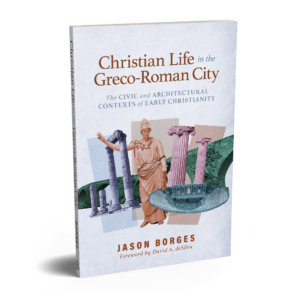
Jason Borges (Ph.D., Durham University) works at the Asia Minor Research Center in Turkey, researching and teaching early Christianity. His latest book, Christian Life in the Greco-Roman City (Baker Academic, 2026), examines how the ancient city shaped the lives and theology of early Christians. A sample of Chapters 1 and 2 can be downloaded here.
 When people visit archaeological sites in the Greco-Roman world, they notice the magnificent, enormous buildings. The architecture is awe-inspiring. Consider the Parthenon in Athens, the Colosseum in Rome, or the theater in Ephesus—massive buildings that remain standing to this day. Nearly every city in the ancient Mediterranean had an array of large civic structures—agoras, temples, baths, theaters, stadiums, prisons, etc. Roman historian Stephen Mitchell notes, “The cities of the Roman Empire were defined and characterized by their public buildings.”
Why did the Greeks and Romans build such magnificent structures? What caused people to invest tremendous resources into the construction of civic buildings? The answer to that question is simple: honor and power.
The driving force behind Roman monumental architecture was honor, the public recognition of a person’s worth. Romans lived for glory. They craved fame. The quest for status lit their fire in life. A common way to gain honor in Greco-Roman culture was through benefaction. The rich sponsored public projects, and the communities that benefited esteemed the benefactor with honorary titles and public statues. By financing a public building, wealthy people converted their money into recognition and honor.
Monumental building projects bestowed “eternal renown and glory” on the benefactor (Pliny the Younger, Ep. 41.1). The most majestic monuments evoked a level of awe and admiration associated with the gods. The exceptional buildings seemed to defy nature and reflect superhuman powers; thus, they evoked divine-like honors for the benefactor.
The benefactor’s fame would live forever, both in memory and on the front of the building. Roman structures featured prominent dedicatory inscriptions announcing who had built them. Carved into stone for perpetuity, the text ensured that future generations (including modern archaeologists!) would know the benefactor’s name and munificence.
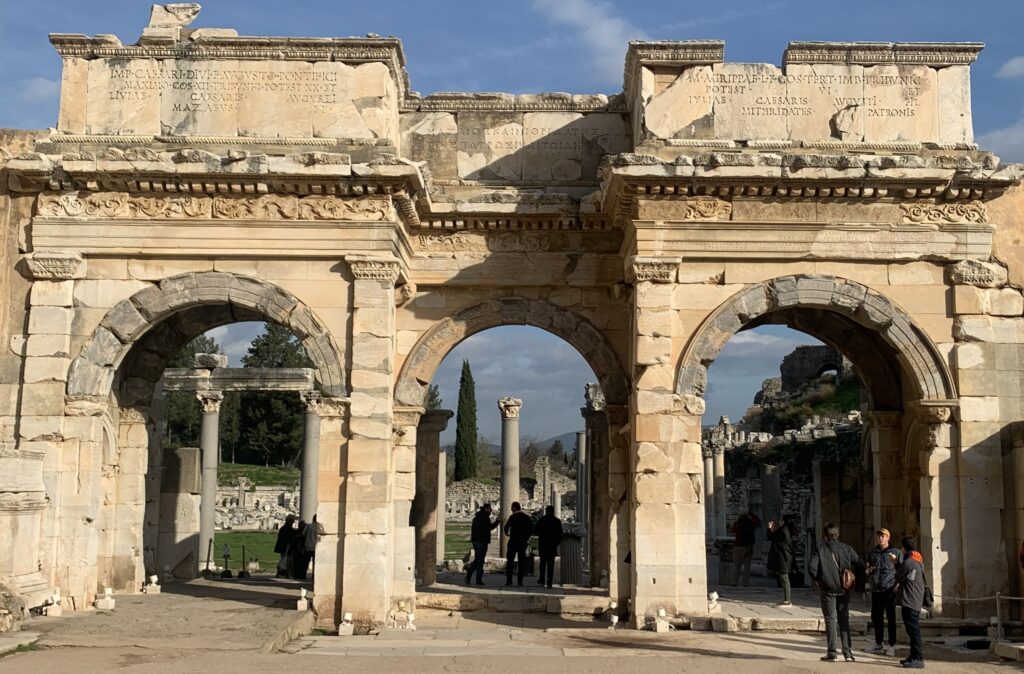
Monumental buildings also legitimized the rule of political leaders. Civic architecture bolstered Rome’s imperial claims, as the buildings projected power. For Roman emperors, the structures declared, in no uncertain terms, “Our buildings are large, and we’re in charge!” Monumental civic architecture communicated honor and power. This social reality was the setting in which Jesus’ first followers lived and ministered.
Early Christianity was more than theological ideas about justification by faith or eternal life. Christians were real people in real places doing real things. The earliest believers worked in agoras, washed in baths, and sat in prisons. Because these cultural values and public moments were normative in the first century, they formed the everyday social context of early Christians (even for Jesus and his Jewish followers in rural Palestine!).
The book, Christian Life in the Greco-Roman City, explores how these seven key civic structures in Roman cities—i.e., agoras, temples, baths, prisons, theaters, libraries, and cemeteries—shaped the lives, writings, and theology of early Christians. The architectural and social background helps modern readers better understand the New Testament. As David deSilva states in the Foreword, “The more fully we can hear these texts from within that context, the more fully we can appreciate what their authors were seeking to accomplish in the lives of Christian disciples.”

resources for Majority World ministry
Your reflections on matters are always pertinent and have a depth that just refreshes me anytime I read your post.
I look forward to ordering this new contriution of your Jason …. a little fearful the glory and honour part of it might remind me too much of modern rulers with their names plastered over their office towers, hotels, resorts and airplanes though… 🙂